
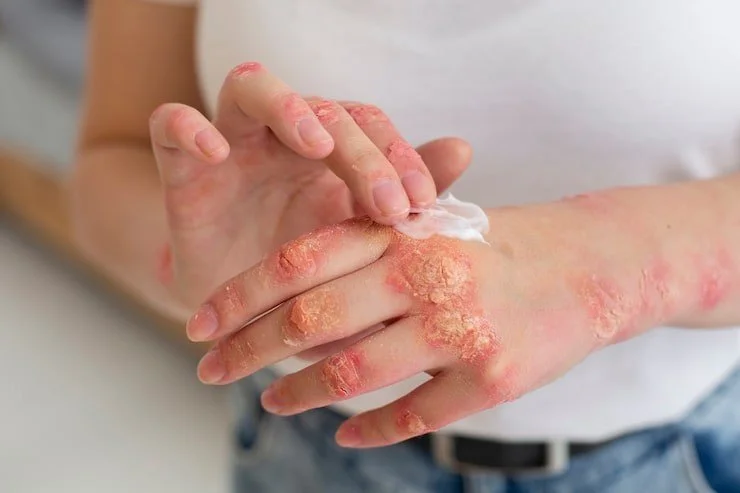
Chronic skin conditions can be among the most stubborn and demoralizing of health problems. Not necessarily dangerous in themselves, they can cause persistent discomfort and cycle through phases of partial relief followed by relapse. Conventional medication, while sometimes reducing symptoms, does not address the underlying cause and often comes with short or long term side effects. After years of managing rather than resolving their condition, many patients arrive at homeopathy having tried many other options.
Why Skin Conditions Keep Recurring
Eczema, psoriasis, and urticaria are rarely what they appear to be on the surface — that is, purely dermatological problems. The skin is reacting to something. It may be a disturbance in immune regulation, an unresolved digestive dysfunction, chronic stress, environmental sensitivities, or some combination of these. Conventional dermatology typically addresses the reaction itself: the inflammation, the itch, the proliferating cells. When the treatment stops, the underlying conditions that produced the eruption are still present, and the skin obliges by erupting again.
Homeopathy takes a different view. Recurring patterns of illness — flare, partial remission, flare again — are understood as signs that the body's self-regulating capacity is compromised. Treatment is therefore aimed not at the skin itself, but at restoring the kind of internal equilibrium that makes these reactions unnecessary in the first place.
The Consultation Process
A homeopathic intake for a skin condition is comprehensive because the information needed to prescribe accurately goes well beyond the presenting complaint. What matters is not simply that a patient has eczema, but the complete picture of the person who has it: when the condition began and under what circumstances, what makes it better or worse, how it behaves across seasons, what other symptoms are present, what the emotional and stress landscape looks like, the history of the digestive system, sleep patterns, food sensitivities, and much else.
This is not incidental detail. Two patients with identical diagnoses may require entirely different remedies because their underlying patterns are different. Homeopathy is individualized by design. The remedy that matches one person's complete symptom picture will not necessarily be appropriate for another, even when the skin presentations look similar.
What Patients Typically Experience
Progress in chronic skin conditions tends to be gradual rather than sudden, though some patients do notice meaningful early changes — reduced intensity of itching, less frequent flares, improvement in sleep or energy — within the first weeks of treatment. For conditions like eczema and urticaria, which often reflect immune hypersensitivity with more reactive patterns, the response can be relatively rapid. Psoriasis, which involves deeper immune dysregulation and frequently has a significant genetic component, typically requires a longer course of treatment and more patience.
The pattern most practitioners observe is a progressive reduction in the frequency and severity of exacerbations, with improvements in overall well-being accompanying or sometimes preceding the skin changes. Patients often report that they feel better in ways that extend beyond the original complaint — that sleep has improved, anxiety is reduced, digestion is more settled. This is consistent with what we expect from constitutional treatment: when the underlying imbalance is being addressed, multiple systems tend to benefit.
Supportive Measures
Homeopathic treatment works best when it is supported by appropriate attention to diet and lifestyle. Identifying food triggers — which may include common culprits like gluten, dairy, or refined sugars, but often include more idiosyncratic individual sensitivities — can make a meaningful difference. Adequate hydration, stress management, and the avoidance of harsh topical products are all sensible adjuncts. When appropriate, nutritional and botanical support may also be incorporated as part of a broader treatment strategy.
Safety and Compatibility with Conventional Care
Homeopathic remedies are non-toxic and carry no risk of the systemic effects associated with long-term corticosteroid use or immunosuppressive therapy. Many patients begin homeopathic treatment while still using their conventional medications, with the expectation that those medications can be reduced or eventually discontinued as the condition stabilizes. That process should be gradual and ideally coordinated with the prescribing physician.
A Realistic Perspective on Timelines
There is no fixed timetable for improvement in chronic skin conditions, and claims to the contrary should be viewed with skepticism. What can be said is that the trajectory of well-managed homeopathic treatment tends to be one of increasing stability: fewer flares, less intense reactions, a reduced reactivity to triggers that previously produced significant symptoms. How quickly that trajectory becomes apparent depends on the chronicity of the condition, the individual's overall constitution, and other factors that only become clear in the course of treatment.
Frequently Asked Questions
1. Can homeopathy help long-standing eczema?
Yes. Eczema responds well to individualized constitutional treatment. The goal is not simply to quiet the skin temporarily but to address the internal patterns — immune reactivity, digestive disturbance, stress sensitivity — that are driving the eruptions. Progress is typically gradual but cumulative.
2. Is psoriasis treatable with homeopathy?
It is, though psoriasis generally requires more extended treatment than conditions like eczema or urticaria. The immune component is deeper, and the hereditary predisposition is significant. Treatment can meaningfully reduce the extent and severity of the condition over time, though realistic expectations are important.
3. Can urticaria be effectively treated?
Yes. Urticaria — particularly when the triggers are identifiable and the reaction patterns are consistent — tends to respond quite well. Appropriate remedy selection depends on the specific character of the eruptions, the triggering factors, and the broader symptom picture.
4. How much does diet matter?
Considerably. Skin inflammation is often diet-sensitive, and what a patient eats can either support or undermine the treatment process. Identifying and reducing trigger foods, improving nutritional status, and supporting digestive health are all relevant to outcomes.
This varies. Some patients notice meaningful early changes; others require weeks or months before the pattern begins to shift. Chronic conditions that have been present for years will not resolve quickly, and treatment must be understood as a process rather than an event.
The Center for Homeopathy is located in Eldorado, outside Santa Fe, New Mexico and offers consultations in person as well as remotely. for patients elsewhere in the country or abroad. To schedule a free preliminary consultation, call 505-557-6470 or contact us at homeopathnm@gmail.com.